Why 50, 100, or 200 Board Game Sets Cost So Much More Per Unit
Many creators ask a reasonable question:
“But if I only need 50 or 100 or 200 board games, shouldn’t the total cost be much less?”
The price for the whole order may be below 1,000 sets.
But the cost per unit will usually be much higher.
That difference surprises many first-time creators. They expect a small order to behave like a smaller version of mass production. From a factory side, it does not work that way.
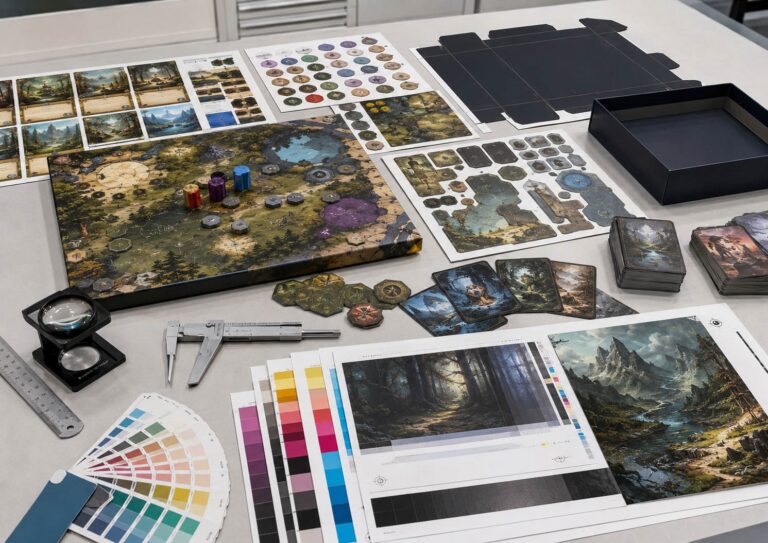
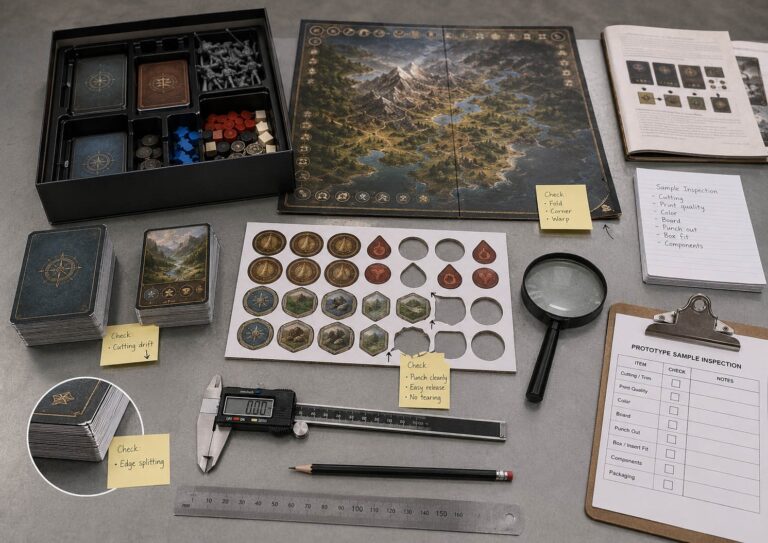
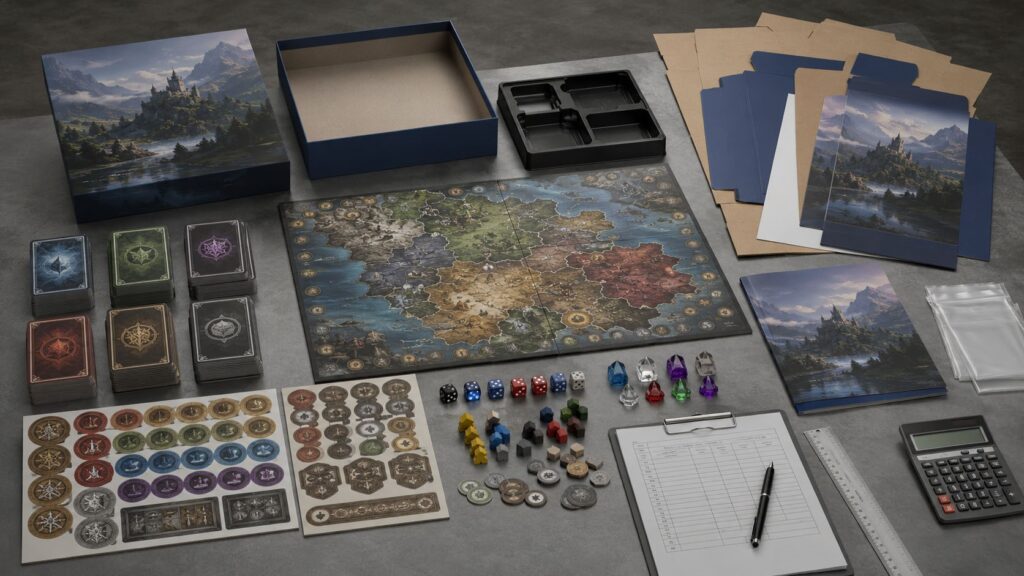
For a custom board game small batch, the factory still has to review files, prepare dielines, set up printing, cut cards, mount boards, produce punchboards, wrap boxes, sort components, assemble sets, check quantity, and pack cartons.
Some steps become smaller.
Many steps do not disappear.
This is why low MOQ board game printing is possible, but it is not automatically cheap.
A 100-set project is not just “one tenth of 1,000 sets.” It is often a full production structure squeezed into a quantity that is too small to spread the fixed setup cost properly.
This article is part of our 2026 series: Board Game Prototyping Problems Creators Face in 2026.
The series looks at the problems independent creators meet before mass production: lost prototype options, overcomplicated designs before the first paid prototype, small-batch pricing, printing defects, dark artwork risks, and AI-generated files that still need factory cleanup before they can be produced.
Small Quantity Does Not Mean Small Setup
The first misunderstanding is simple: creators think factories charge mainly for materials.
Those materials matter, but they are not the whole cost.
A custom board game has fixed work before the first sellable set is packed.
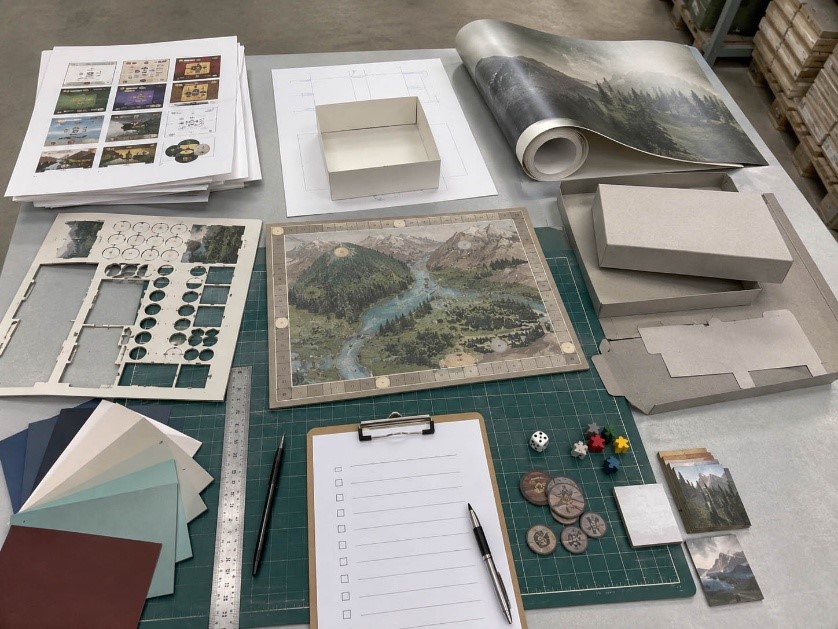
That fixed work can include file checking, template setup, imposition, plate-making or digital setup, die-cutting plate preparation, material ordering, surface finishing setup, board mounting, box wrapping, component sorting, assembly planning, QC, and export carton packing.
For 1,000 sets, that fixed work spreads across many copies.
For 100 sets, the same fixed work spreads across only 100 copies.
That is the uncomfortable part of board game manufacturing cost per unit.
The factory may use less paper and fewer boxes for 100 sets. But the file review, cutting setup, packing logic, and production coordination still happen. The sample room, print room, finishing team, assembly workers, and QC team still touch the job.
This is why a small run can feel expensive even when the material quantity looks low.
The factory is not only selling materials.
It is selling setup, coordination, risk control, and time on a mixed production floor.
Why 50–200 Sets Behave Like a Small Production Batch
Buyers often group 50, 100, and 200 sets together as “small quantity.”
From a factory side, the more useful question is not only the number.
It is the product structure.
A 50-set card game in a tuck box and a 50-set board game with a rigid box, mounted board, punchboards, rulebook, insert, wooden pieces, and multiple card decks aren’t in the same cost conversation.
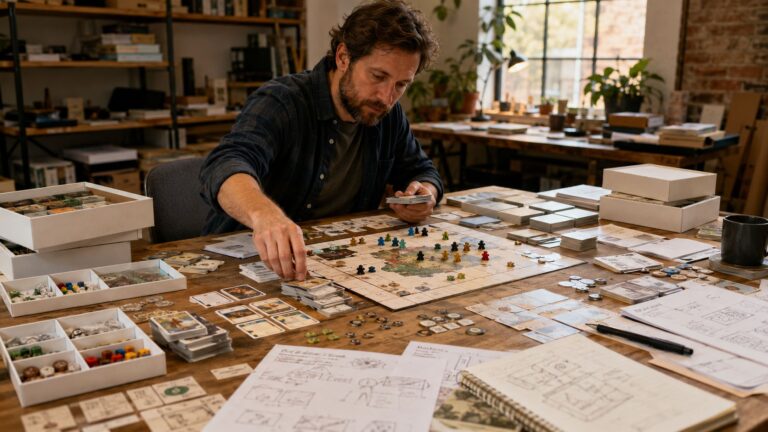
A 100 sets ordered might seem like a prototype to the designer. But if every copy needs finished components, complete packing, QC, and export cartons, the factory has to treat it as a small production batch.
A 200-set order gives a little more room for material use, assembly flow, and carton planning. But it is still not mass production. If the structure is complex, the unit price can still feel uncomfortable.
So the better question is not:
“Can you produce 50 or 100 sets?”
What you should know is:
How many this product structure do you want the factory to produce, 50, 100 or 200?
Small quantity protects cash.
It does not automatically protect unit cost.
Digital Printing Helps, But It Does Not Remove Assembly Cost
Digital printing can help board game printing for low MOQ.
It can avoid some of the traditional offset printing setup cost. It is practical for prototypes, preview copies, and short runs where full offset setup would be too expensive.
But digital printing does not solve the whole cost problem.
A board game is not only a printed sheet.
After printing, the job may still need:
Digital printing may reduce part of the printing setup.
It does not remove cutting, folding, mounting, wrapping, sorting, or packing.
If your project is only a card deck, the digital route may help a lot.
If your project has a full retail structure, digital printing helps only one part of the problem.
This is why a digitally printed small batch can still be expensive. The printing method changed, but the product still needs real manufacturing work.
Do not assume “digital sample” means “cheap finished board game.”
The Cost Is Usually Locked Before the Quote
Many creators try to reduce the price after the specification is already too heavy.
That is late.
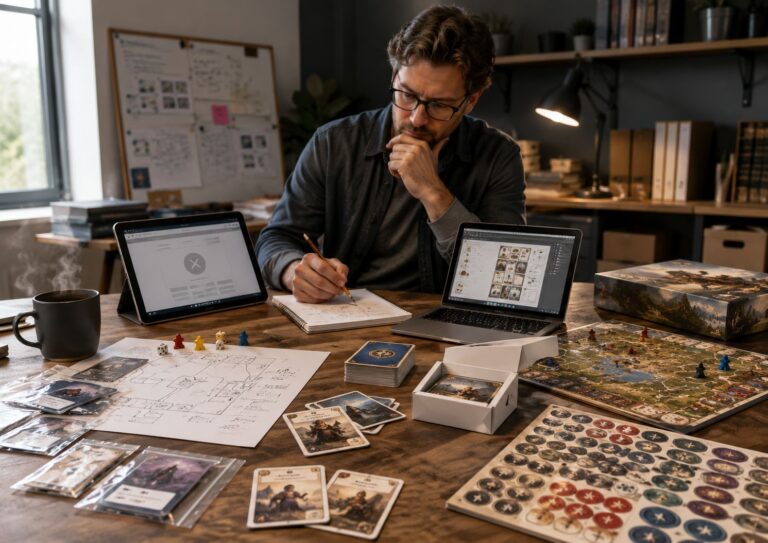
By the time a factory receives a component list with a mounted board, two punchboards, 150 cards, custom wooden pieces, a rigid box, a plastic tray, a rulebook, and shrink wrap, most of the cost logic is already locked.
At that point, asking for a lower price can only do so much.
The better cost control happens before the quote.
If the card count is still flexible, reduce weak content first.
If the token system is still growing, merge component types before adding another punchboard.
If the box size is based on a render, rebuild the box around the real component stack.
If the insert is only there to make the sample feel premium, remove it or use simpler packing.
If the rulebook keeps growing, the game may still be carrying rules overhead.
I use the term budget lock-in for this stage.
Once the board fold, box depth, card count, punchboard quantity, insert direction, and component categories are chosen, the budget is already mostly shaped. The factory still has the ability to optimize, but it cannot turn a heavy structure into a light structure without changing the structure itself.
That is why a low MOQ quote often feels painful.
The factory is not punishing the small order.
The product structure has already decided too much of the cost.
Which Components Make Low MOQ Pricing Worse
Not all components hurt small-batch pricing equally.
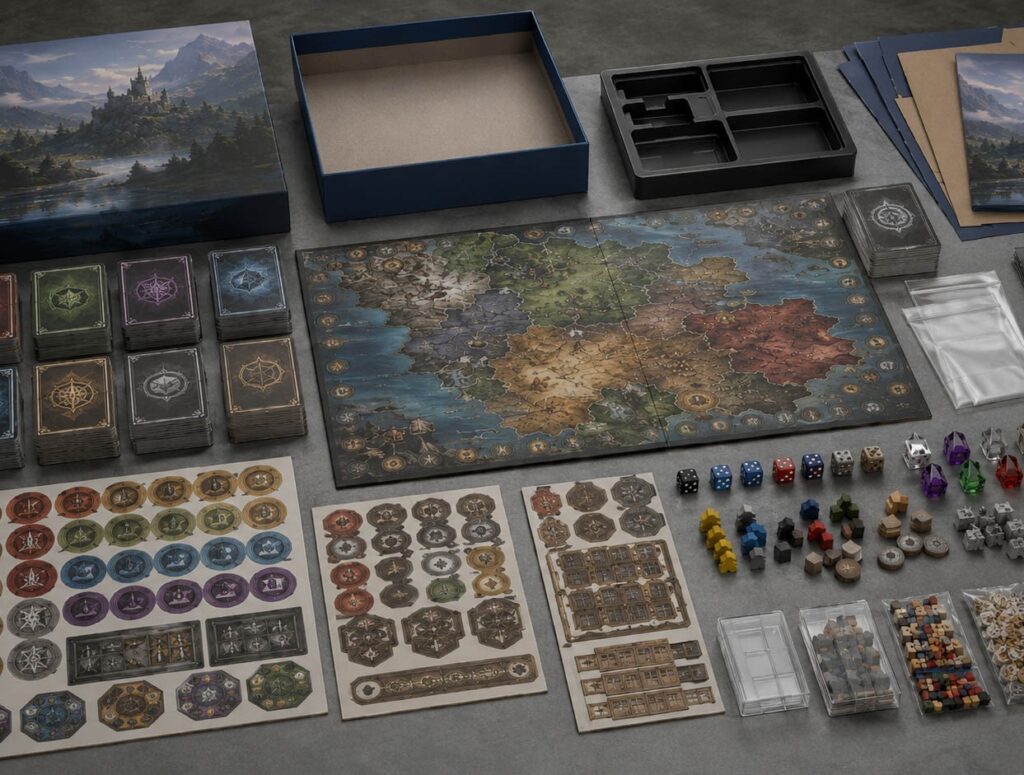
Cards are usually the easiest part to scale, especially if they use standard sizes. A standard-size card deck is much easier to manage than a custom size with unusual finishing.
Punchboards are more sensitive. They requires die-cutting tools, material thickness decisions, front/back alignment, release testing, and additional packing space. One punchboard may be fine. Several punchboards with many small tokens can change both production and assembly time.
Mounted game boards add another layer. Folding style, board thickness, paper mounting, surface finish, and final folded size all affect the box. A bi-fold board and a quad-fold board may lead to different box dimensions even if the play area is similar.
Rigid boxes are often underestimated. A lid-and-base box is not just printed paper. It involves greyboard, wrap paper, corner wrapping, handwork, drying, and quality checking. At low quantity, box setup and manual work carry a heavy cost.
Custom inserts can be useful, but they should be questioned in a 50–200 set order. A blister tray or paperboard insert can improve presentation and packing. It can also add tooling, design time, and a new fit-check problem. If the insert is only cosmetic, it may be one of the first things to simplify.
Custom wooden, plastic, resin, metal, or acrylic pieces need separate attention. Standard dice or off-the-shelf pawns are one thing. Custom shaped pieces are a different conversation. At low MOQ, these parts can make the quote look strange because the setup and sourcing effort do not shrink in proportion to the order.
So when a small batch feels expensive, do not only ask which material is costly.
Ask which component category is creating another production path.
One more component type is rarely just one more part.
It is another counting, packing, QC, and replacement variable.
How to Reduce Small-Batch Cost Without Damaging the Game
There are good ways and bad ways to reduce a small-batch quote.
A bad way is cutting the wrong quality item first.
For example, reducing card stock too much may make the prototype feel cheap. Removing surface protection from a heavily handled deck may create wear. Choosing a weak box for a game that depends on shelf presence may damage the impression. Using a thin board just to save cost may make the whole product feel less serious.
Those cuts may reduce the quote, but they also reduce the reason for making a physical sample.
The better approach is structural simplification.
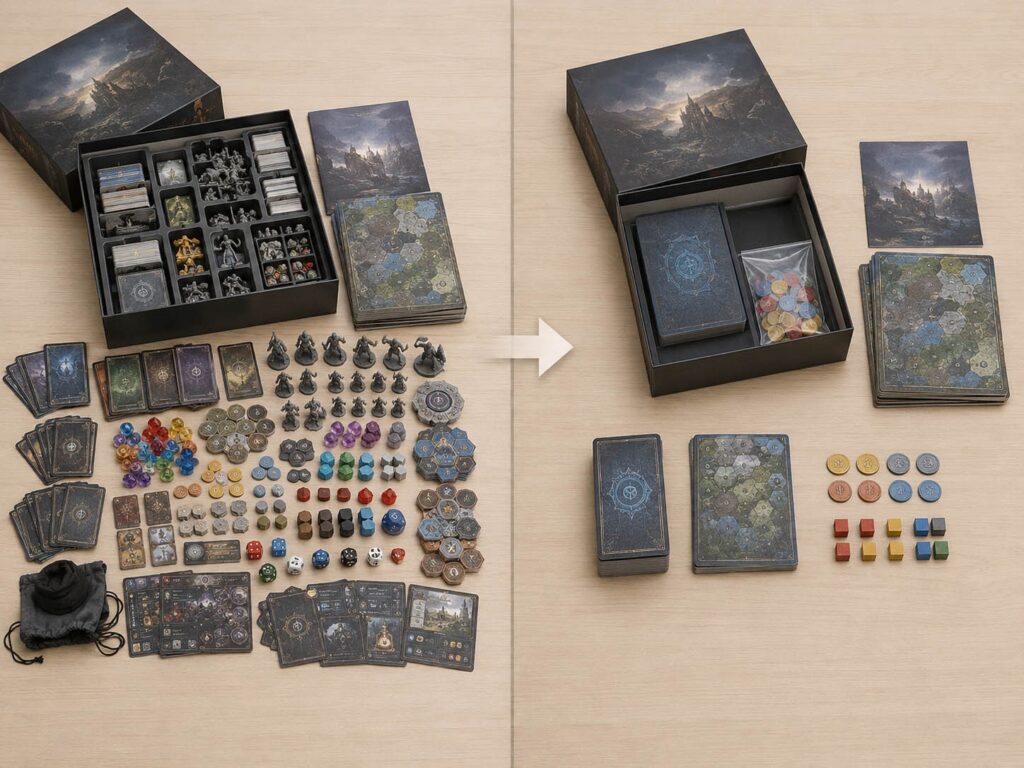
This is not about making the game cheap.
It is about making the first serious batch controlled.
If a creator wants 100 finished copies with every final feature included, that may be possible. But the price may not be comfortable.
To decide which parts are production-critical and which parts can wait until the 500 or 1,000-set run for the design is a good way if the budget is tight.
That decision must make before the quote, not after.
When 500 or 1,000 Sets Starts to Make More Sense
There is a point where a creator should stop forcing the project into a very small quantity.
For many custom board games, 500 sets is where the discussion starts becoming more realistic. For heavier board games, 1,000 sets may be the first quantity where the unit price begins to match the creator’s expectations.
That does not mean 500 or 1,000 sets are automatically cheap.
A complex game is still complex.
But economies of scale start to work better when the fixed setup cost spreads across more copies. Printing, material ordering, box production, punchboard setup, assembly planning, and carton packing become more efficient when the production run is not extremely short.
This is where creators need to be honest about intent.
If the game is still being tested, do not jump to 1,000 sets just because the unit price looks better.
A lower unit price does not fix an unfinished design.
But if the game is stable, the artwork is close to final, the component list is locked, and there is a real sales plan, then forcing the project into 100 copies may not be the best choice either. You may pay a high unit cost and still not have enough inventory to support the launch.
Small quantity protects cash.
Larger quantity protects unit cost.
You cannot optimize both at the same time.
What to Send When Asking for a Low MOQ Board Game Quote
If you want a useful quote for 50, 100, or 200 sets, do not only ask:
“How much for a board game?”
That is not enough.
Send enough information for the manufacturer to understand whether this is a prototype, a preview batch, or a small production order.
Useful information includes:
The exact specification can be adjusted later.
But the factory needs enough structure to choose the right quoting path.
A 100-set preview batch with a rigid box and mounted board is not the same as 100 card decks in tuck boxes. A 200-set game with standard components is not the same as a 200-set game with five custom part categories.
The earlier you make that difference clear, the less time the quote will waste.
One Warning Before You Ask for 100 Sets
Don’t use 100 sets as a way out of making a decision.
Sometimes creators pick 100 sets because they’re not ready for mass production but want something that looks finished. This makes sense when the purpose is clear, reviewer copies, Kickstarter preview copies, convention demos, or a controlled pilot run.
But if the design is still a work in progress, 100 finished sets might be too many.
If the product structure is not locked, it may be too early.
If the budget cannot support real setup cost, it may be the wrong route.
If the goal is only to test rules, it is almost certainly overbuilt.
This article does not apply cleanly to every project. Handmade art games, local limited editions, deluxe collector items, and campaign-heavy products can have different logic. We will not pretend one small-batch rule covers every board game.
But for most independent creators, the warning is simple:
Do not expect factory production to behave like POD pricing just because the quantity is small.
A 50–200 set custom board game run can be useful. It can also become the most expensive way to discover that the product should have been simplified earlier.
If you are considering a low MOQ board game run, send us your component list, target quantity, and the purpose of the copies. We can help you decide whether the project should stay as a prototype, move into a small preview batch, or wait until the design is ready for a more efficient production quantity.
Read the Full 2026 Prototype Problem Series
This article is part of our series: Board Game Prototyping Problems Creators Face in 2026.
The series covers the main problems independent creators meet before mass production: